
Trends in Admissions and Higher ED, Part 1 - Colleges are Following Two Pathways
I want to start by thanking our Admissions Village team for helping to put together this information and especially Meg Joyce who co-authored this blog series with me.
If last year’s admissions and higher ed theme was uncertainty, this year’s theme is time. Let’s start with colleges. They are at a very precipitous time in history. Colleges have been playing the long game for a very extended period of time, and there are some things that are finally catching up with them, and most relate to money.
Playing the Long Game - Two Different Pathways
Why have colleges been playing the long game? They have been preparing for the demographic cliff that hit this year. We have fewer future high school students going forward simply because fewer children were born starting around the time of the 2008 financial crisis. So, how have colleges been playing the long game? Over the years, in order to enroll the classes they hope to, colleges have followed one of two enrollment management pathways or both. Highly selective colleges were concerned about remaining desirable and attracting the top students. They followed the first pathway to increase their applicant pool by attracting students who were not traditionally attending college or their colleges, thereby improving the education of all of their students by having a more diverse class. How did they do this? They started heavily marketing themselves to low-income, first-generation, small-town and rural, international students, and different ethnic populations, and they backed that up with generous financial aid packages. After the Supreme Court’s 2023 decision against race-based affirmative action, they essentially moved to economic affirmative action, but with the original case behind this decision starting in late 2014, they had already set economic affirmative action in motion almost 10 years prior. In fact, they set it in motion way before then, as Princeton announced it would meet full demonstrated need without loans in April 2002.
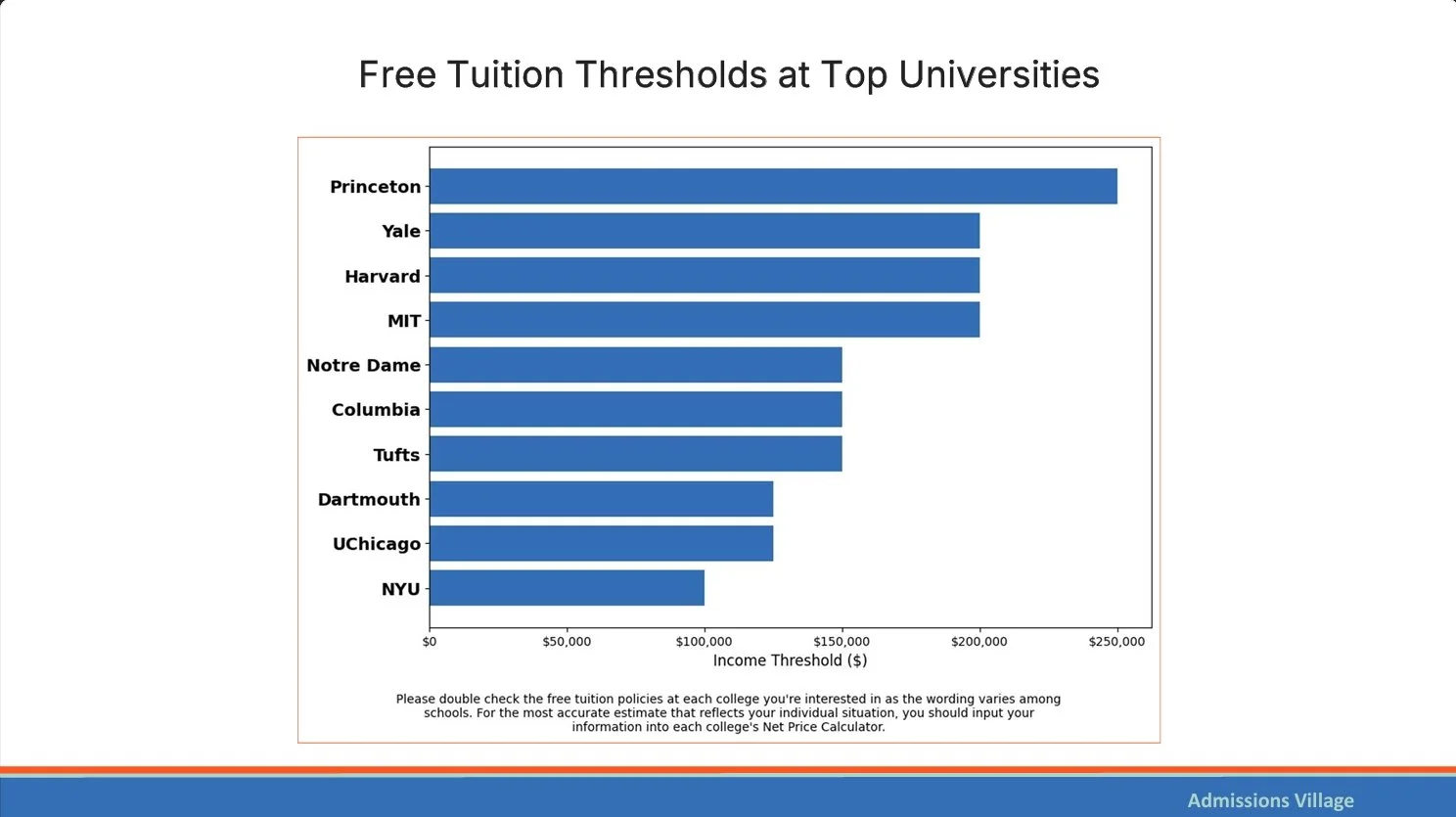
Approximately 70–80 elite private colleges and a few public universities now meet 100% of demonstrated financial need, a slight increase from about 60–70 schools two decades ago. Roughly 20–30+ institutions now offer "no-loan" packages—eliminating loans entirely for families with incomes below specific thresholds.
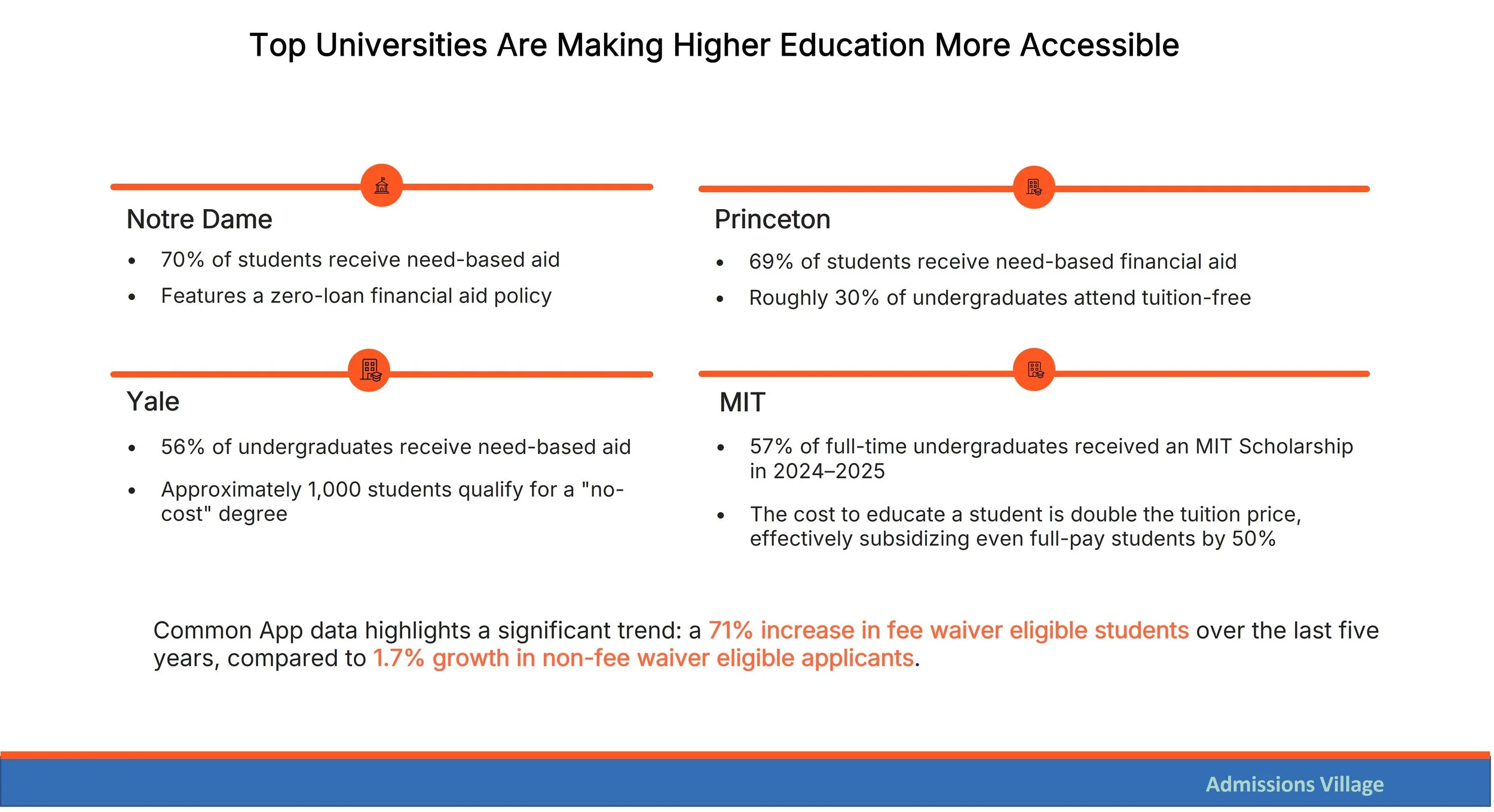
As you can see from the above chart, at our most competitive colleges, over half the students qualify for need-based aid, and they aren’t paying anything, or they’re paying a small amount. In addition, even full-pay students often cost the colleges twice what their tuition brings in. Economic affirmative action is working. Has racial diversity been impacted by the 2023 Supreme Court ruling? A new study by the Progressive Policy Institute finds it has declined much less than was predicted.
So what is the second pathway? Other colleges also wanted to attract students, but they had an even more pressing concern: their ability to fill their classes amid the demographic cliff. They knew they had to increase their competitiveness in order to do so. How did they do that? They started awarding large merit scholarships. About 25 years ago, colleges discovered that merit scholarships could attract higher-achieving students, which helped them rise in the rankings and made people feel their colleges were better. But many colleges began offering merit scholarships at the same time, and things kind of spiraled as each one had to offer more and more money to beat out the next college. With credit to Higher Ed Insights substack, “economists have a name for this: the prisoner’s dilemma. Colleges must keep discounting to stay competitive, and the collective result of so many colleges doing that is that the entire sector is moving towards insolvency together.”
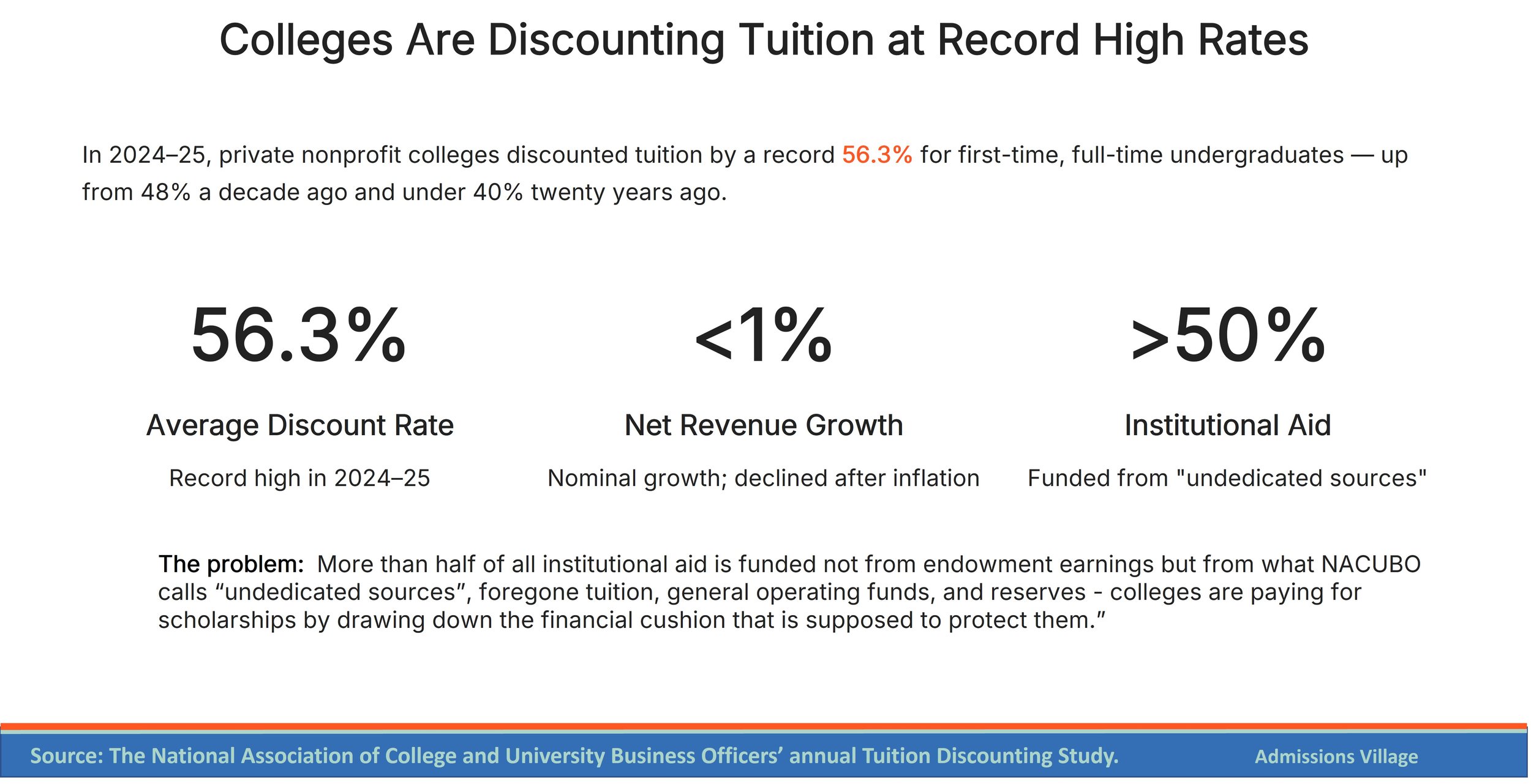
Private colleges discounting tuition by an average of 56.3% is a record high, meaning that for every dollar of tuition a private college could theoretically charge, it collects 44 cents. While it is great that both private and public colleges are accessible to more students, both pathways have led to the same result: most colleges subsidize most of their students.
Colleges and Families Are Feeling Financially Strained
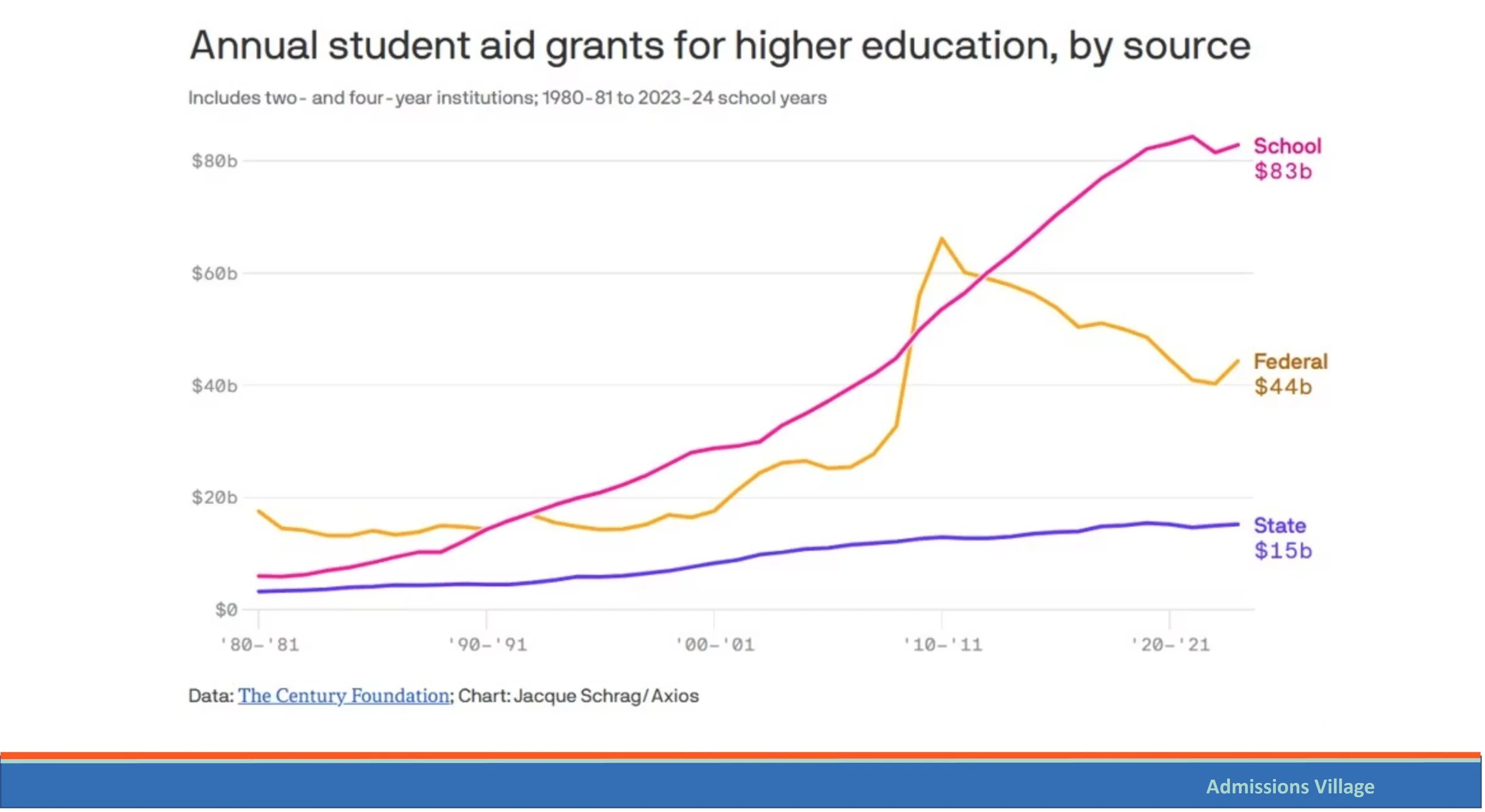
The reality is many students are paying less to go to college today than 20 years ago, especially when adjusted for inflation, but just like in our own lives, everything else is costing more, so families have less money available to pay the college bill.
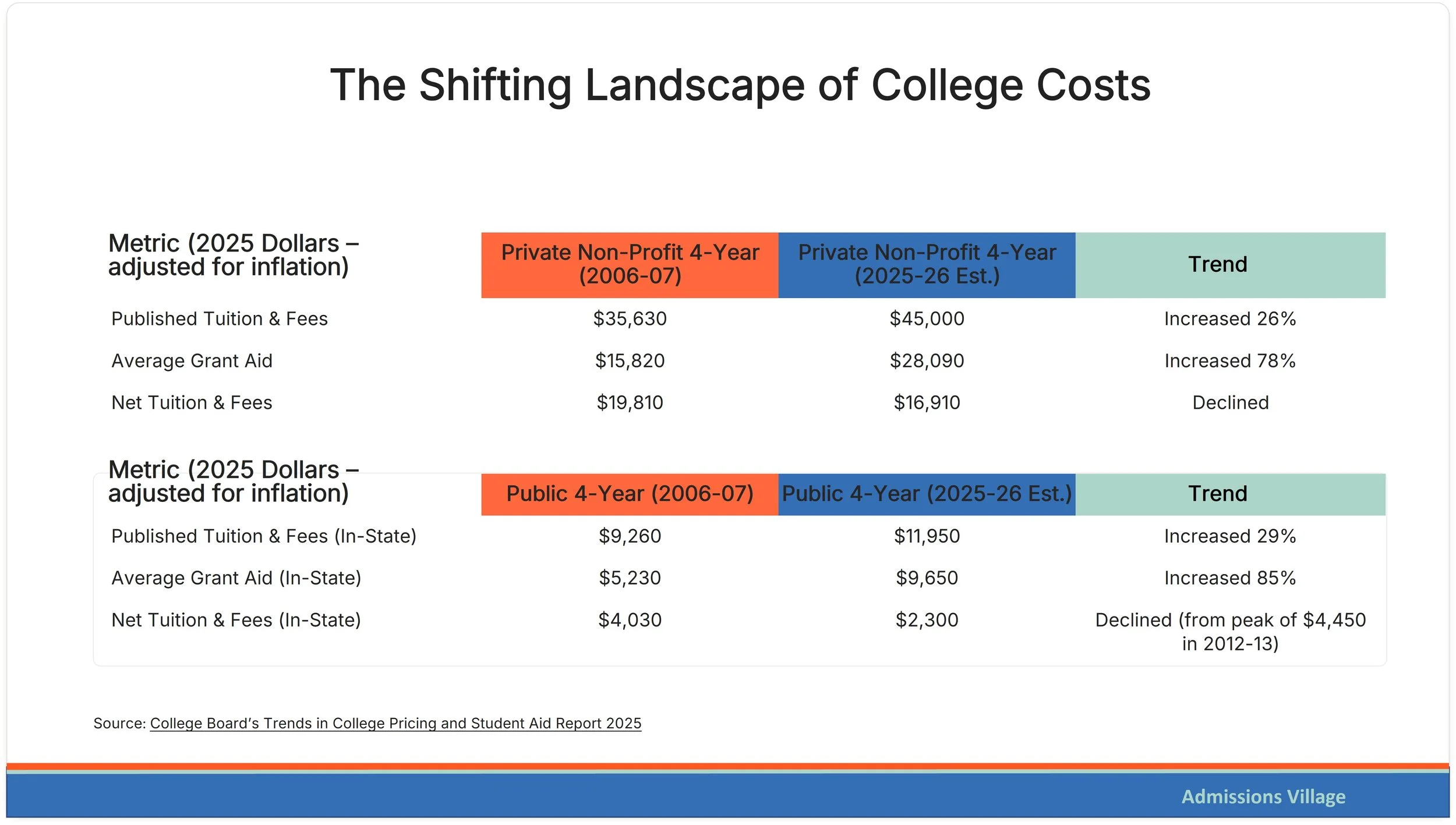
As you can see, when adjusted for inflation, aid for students has increased significantly over the last 20 years, while net tuition has not. According to the March 3rd NEXT Newsletter, what students actually pay after financial aid is factored in has been relatively flat at private colleges for lower- and middle-income families earning up to $170,000 a year since 2008, even after adjusting for inflation.
Marshall Steinbaum, assistant professor of economics at the University of Utah, told the Times Higher Education, “The three-legged stool of higher education finance in the United States is tuition, federal research funding, and state appropriations. All three legs have been cut down in the last year.” This is not new. Colleges have been slowly receiving less tuition for over 20 years now, but here is why this year’s theme is timing: it is catching up to them, and especially this year, because the other two main sources of institutional funding - federal research dollars and state appropriations - are also taking big hits. Add to that new expenses, some of which were predictable and some not, which we will break down in a bit. Both groups of colleges are receiving less tuition in an effort to yield more competitive applicants, and they have worked themselves into a corner. According to an analysis by Robert Kelchen, Professor and Head of the Department of Educational Leadership and Policy Studies at the University of Tennessee, Knoxville, based on IPEDS data, 40% of private colleges and 20% of public colleges are running deficits. Some major institutions facing deficits or significant budget shortfalls include the University of Chicago ($160M-$221M), University of Connecticut ($70M), Temple University ($60M), University of Southern California ($200M+), Harvard (113m), and Columbia University ($40M).
Why, Beyond a Lack of Tuition Revenue, Are Colleges Feeling Financially Strained? This again goes back to timing. There were many major changes this year that did not exist a year ago.
The first new expense concerns threats to federal research funding and pressure from the Trump administration over affirmative action. Brown, Columbia, Cornell, Northwestern, the University of Pennsylvania, and the University of Virginia all reached settlements that include a mix of fines, policy changes, and payouts to specific organizations, the largest being a $200 million fine for Columbia. Many more colleges and universities have proactively made DEI-related policy changes as a result.
Increased endowment taxes. Private colleges with the largest endowments per student have a new and, in some cases, huge cost. Starting this academic year, private colleges with more than 3,000 tuition-paying students are subject to a sliding-scale tax of up to 8% on endowment income. This tax used to be a flat 1.4%. In August of 2025, Princeton increased its financial aid income threshold to $250,000 for most families to qualify for free tuition. According to The Daily Princetonian, this move, which costs the university $44 million was done in part because it put Princeton’s number of students paying tuition under 3,000 students, thereby allowing them to avoid paying the endowment tax entirely, saving them $180 million. Princeton can only do this because of their smaller size. We expect to see other colleges where the math makes sense start to offer free tuition under certain income thresholds to avoid this endowment tax. For Harvard, the new tax will cost approximately $300 million annually. Yale’s president estimated $280 million in the very first year. This matters because every additional endowment tax dollar directly impacts funds available for research, teaching, and scholarships. According to The Chronicle of Higher Education, “on average, endowments now fund 15.2 percent of operating expenses across higher education, up from 10.9 percent just two years ago, and at the most endowment-dependent institutions, the reliance is far higher. Princeton funds roughly 65 percent of its operating budget from its endowment, up from around 15 percent in 1985. Grinnell and Swarthmore are near 60 percent. Bowdoin is at 51 percent. Harvard is around 40 percent.” In our opinion, the change to the endowment tax is a very big reason students and families should be reconsidering small colleges, as they’re not only exempt from the increase, but as the President of Swarthmore explained, they’re now exempt from the tax entirely. This means 26 wealthier small institutions are avoiding the increase and saving the 1.4% tax they had been paying.
Changes to the federal student loan program are adding pressure on colleges to increase scholarships or offer loans themselves to families. These changes mean that, starting this summer, students and families might no longer be able to afford 4-year colleges which were once within financial reach. Undergrads will still be able to take out federal loans of between $5,500 and $7,500 each year, but parent PLUS loans for their undergraduate children will have annual limits of $20,000 and a lifetime limit of just $65,000 per student, when currently they can cover up to the entire cost of attendance. Additionally, many families with existing Parent PLUS loans and a student starting or continuing college in the fall are not aware that a new disbursement after July 1, 2026, may change their repayment plan options for their entire balance. The Grad PLUS loan program, which had allowed graduate students to borrow up to the cost of attendance, is ending. Students will still be able to take out federal loans for grad school, though they’ll have annual and total limits according to the type of degree, and there are new lifetime borrowing limits for all federal student loans that could make financing multiple advanced degrees challenging. There are more details and there will be grandfathering, but new borrowers will be subject to these restrictions.
Back to our theme of timing again - keep in mind this is all happening at a time when the Department of Education is being dismantled. Operational responsibility for the $1.7 trillion federal student loan portfolio is shifting from the Department of Education to the U.S. Treasury, and eventually all federal student loan functions including the processing of FAFSA (the Free Application for Federal Student Aid) will also be the Treasury Department’s responsibility. But as noted in Higher Ed Insights, the Department of Education’s workforce has gone from approximately 4,100 employees to around 2,800, and Federal Student Aid, the office that administers the financial aid system most families interact with, has lost nearly half its staff.
Fewer full-pay students at most colleges. Our experience has been that some families are willing to pay full price for certain name-brand schools but not for other similar schools. Jeff Selingo has spoken about a similar phenomenon: “Colleges at all but the very top of the rankings are pushing the limits of what higher-income families will pay. Wealthier families are deciding that—barring an acceptance to the most prestigious institutions—these prices don’t make sense anymore. They’re willing to trade a certain amount of prestige for a discounted price at a college deeper in the rankings. That shift among the richest families has ripple effects further down the income scale, as colleges have fewer full-payers to pay for merit-aid discounts for middle-income families.”
There are fewer international students because of the difficulties in obtaining visas. This is a huge problem for most institutions, as their international students pay full tuition.
Deferred maintenance and ambitious building projects that are no longer needed. According to Inside Higher Ed’s annual survey with Hanover Research, 63% of colleges were planning to fund less than a quarter of their deferred maintenance needs last fiscal year, and 36% of university Chief Business Officers identified infrastructure and deferred maintenance costs as a top financial risk to their institution, just behind state and/or federal policy changes. St Michael’s College in Vermont has dorms built within the last 20 years that now stand empty. Compounding the problem for colleges is the fact that it becomes harder to attract and yield new students when prospective students tour underutilized campuses and buildings in need of repair.
Athletics expenses at many NCAA Division I colleges are on the rise. Starting July 1st last year, DI colleges can directly pay athletes via revenue sharing, up to a total of $20.5 million dollars. Scholarship limits have been replaced with roster limits, meaning schools can now fund as many full or partial athletic scholarships as they want, so long as they stay within the sport’s specific roster caps. Baseball, for example, used to have a scholarship limit of 11.7, but now it has a roster limit of 34. That means DI schools have a potential increase of up to 22.3 new baseball scholarships to fund.
And finally, the rise in AI has brought us back full circle and fueled those questioning the value of a college degree.
Although highly selective and well-endowed private and public institutions will adjust more easily to the new environment, Todd Ely who is a professor in the School of Public Affairs at the University of Colorado–Denver said in Inside Higher Ed, “‘Uncertainty’ remains the watchword for U.S. higher education.” “Research-intensive institutions, historically envied for their diverse revenue streams and lack of dependence on tuition revenue, have had their model of higher education funding thrown into disarray. The battle for tuition-paying students will only increase, straining the enrollments of less selective and smaller private colleges and regional public universities.”
Please read part 2 of this blog for how all of this affected admissions this year.